Document anatomy
A medically justified scan could be securely stored as a 3D dataset before a later need arises. When retrieved, its currency, consent and clinical suitability would need to be reassessed.

Research · development · regulatory evidence
Our vision is patient-specific bone replacement through 3D printing. In parallel with plastic printing, we plan to develop the medical application and the evidence it requires.
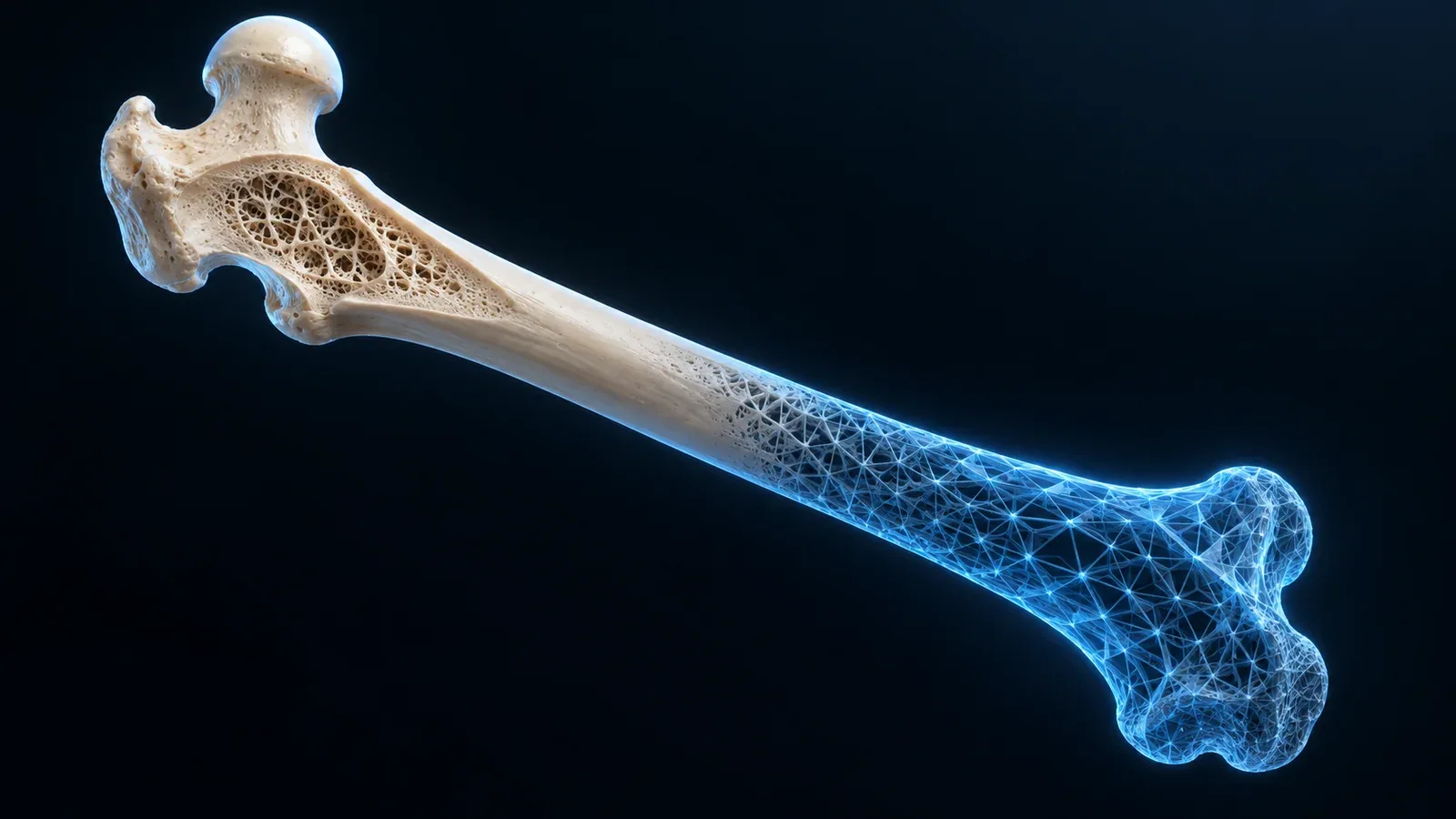
DEVELOPMENT OBJECTIVE
Medical imaging and digital preparation are intended to provide geometry that matches the specific need. Depending on the defect, a complete replacement segment or only a required component could be manufactured.
Printing a structure is one step within a medical manufacturing process. Biocompatibility, load-bearing capacity, hygiene and clinical suitability must be demonstrated for the selected material and application.
01 / THREE PLANNED DATA WORKFLOWS
A medically justified scan could be securely stored as a 3D dataset before a later need arises. When retrieved, its currency, consent and clinical suitability would need to be reassessed.
Medical imaging captures the injury. Specialists prepare the required replacement geometry and check the dataset before releasing it for manufacture.
A segment is designed, derived from scan data or digitally reconstructed. The objective is a structure matched to the need rather than a complete bone replacement.
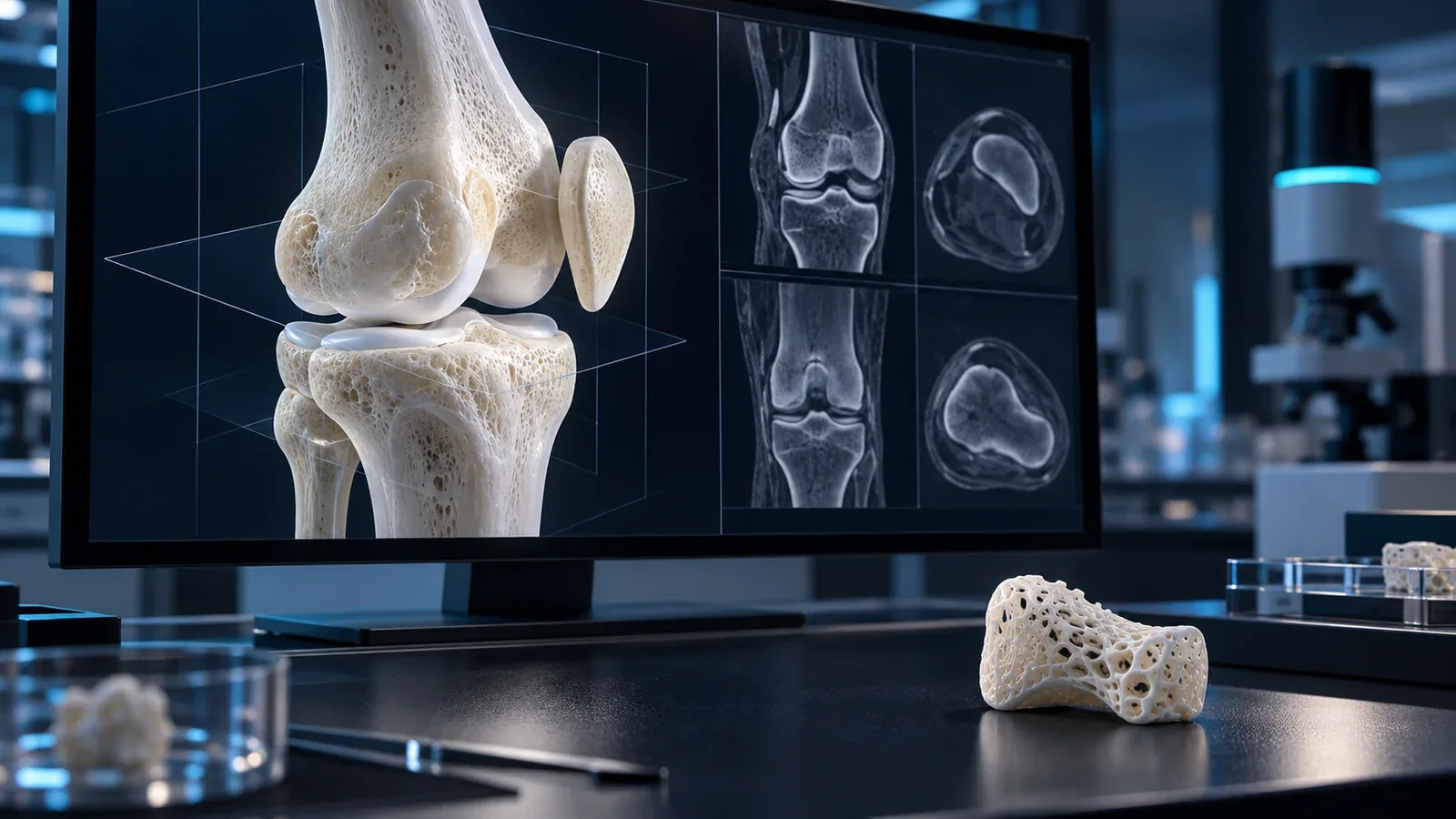
02 / PLANNED PROCESS CHAIN
Imaging, secure storage and controlled access to sensitive health data.
3D geometry, material selection and medical and technical assessment.
Release for manufacture within a validated and documented process.
Quality control and the necessary regulatory evidence before potential clinical use.
The medical application is in planning and development. This website does not offer clinical treatment, an approved bone implant or patient data storage.
03 / DEVELOPMENT PATH
Biomaterials, manufacturing, sterilisation and quality control must be developed together. Regulatory classification follows the specific intended purpose. A patient-specific 3D model is not automatically a custom-made device.
Swissmedic: 3D printers as medical devices ↗This is a development objective. An approved clinical application is not offered here. Materials, the manufacturing process and safety must be demonstrated for the specific intended purpose.
The planned workflows use medical imaging, existing 3D datasets or digital preparation of individual bone components. Medical professionals assess the data and define the target geometry.
The design concept aims to make material-contact components and cables easier to dismantle. Whether a sterilisation bath is suitable depends on the material, procedure and evidence of effectiveness, and must be validated.