Prototype parts
Investigate geometry, fit and function on a printed part. Print orientation and material follow the test objective.

First planned application focus
3D plastic printing is our first application focus for the cable robot. Here we are developing the foundation for flexible additive manufacturing.
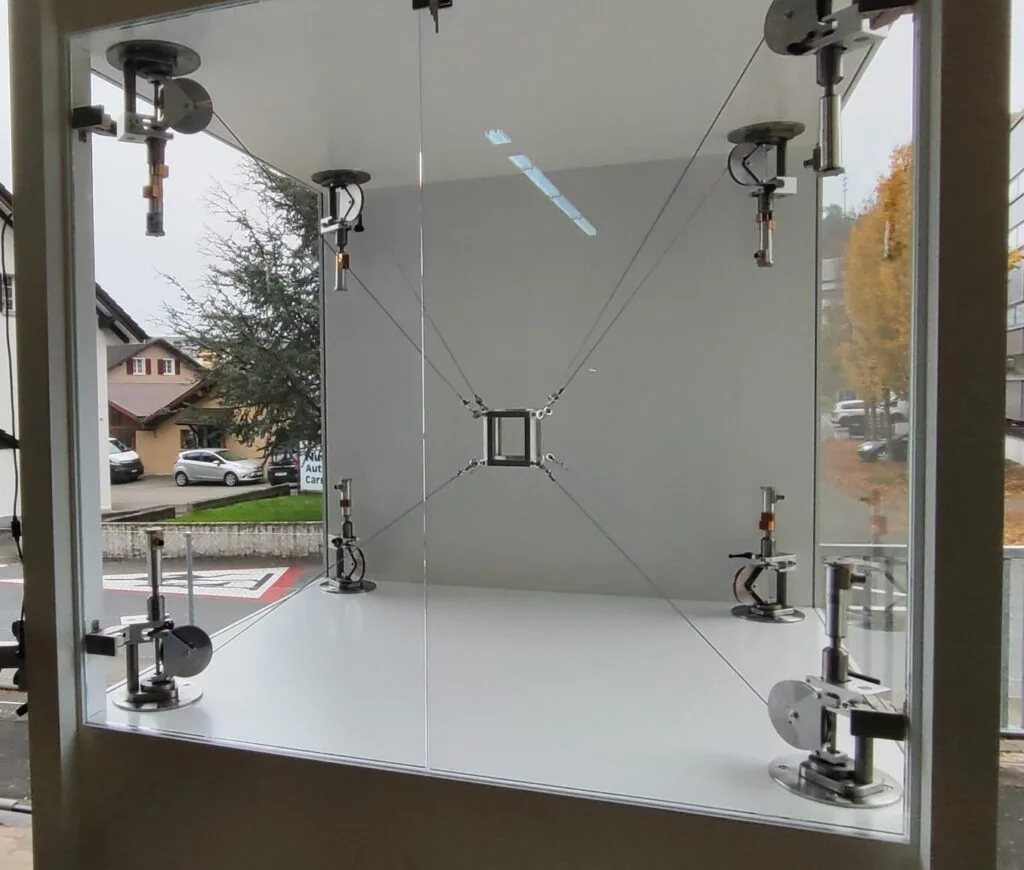
FOCUS / PARTS FOR INDUSTRY
Investigate geometry, fit and function on a printed part. Print orientation and material follow the test objective.
Applications include assembly aids, holders and custom fixtures. Loads and the operating environment determine material and design.
Prepare parts from STEP or STL models. Wall thickness, supports, layer height and dimensional accuracy are coordinated with the printing process.
01 / FROM MODEL TO PART
Design a part or prepare suitable scan data. Printability and geometry are checked.
Material, extrusion, print path and cable robot are coordinated.
The print head follows the planned path. Process parameters and quality are assessed.
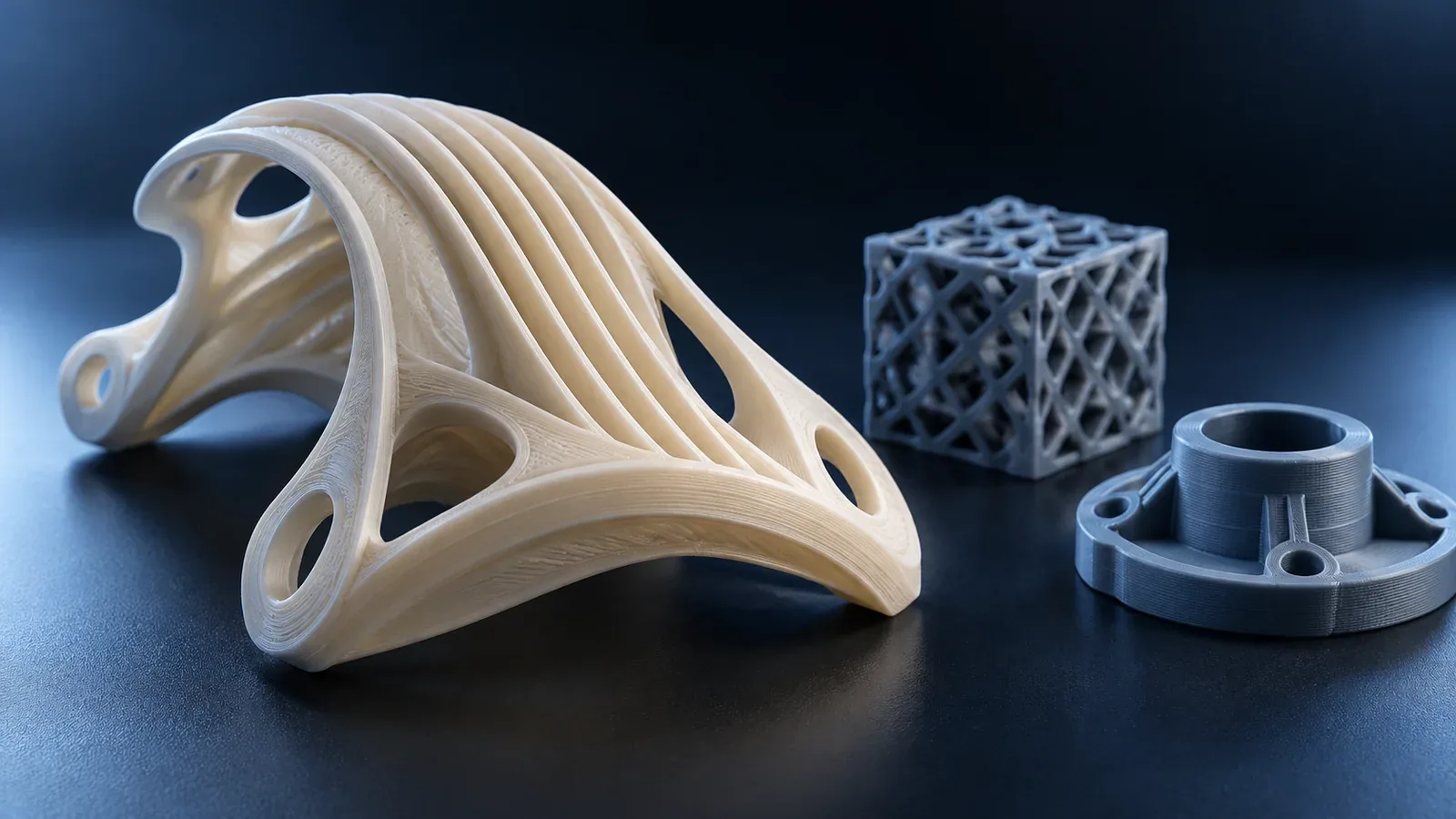
02 / POTENTIAL
Functional prototypes and geometry models make digital ideas tangible and support iterative product development.
A flexible structure creates potential for different part sizes. Each machine is designed to suit its task.
The suitability of plastics, print head and material supply is tested for the relevant process. Binding material approvals and performance specifications are agreed for each project.
THE PHYSICAL SETUP
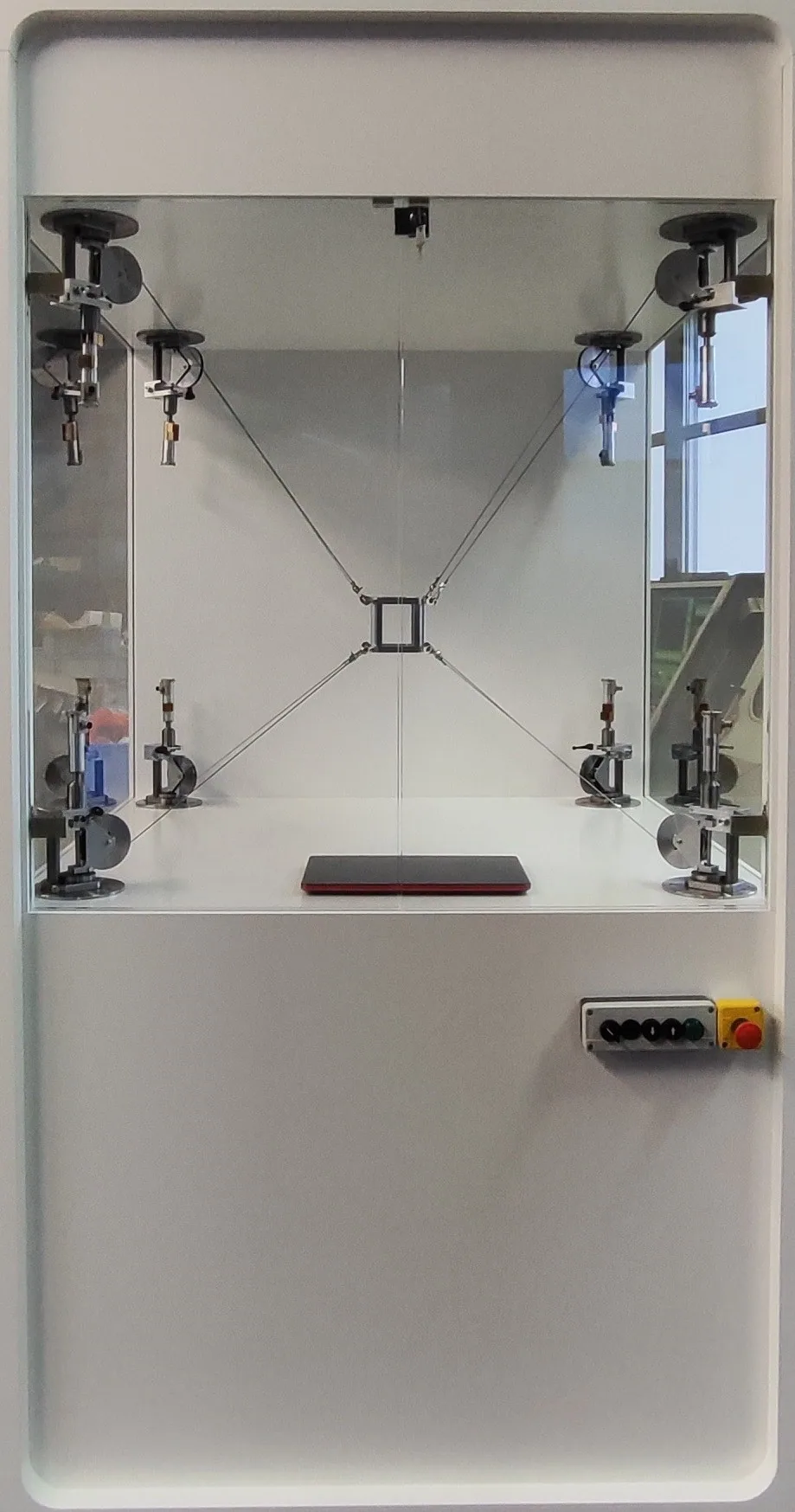
The original photograph shows the cable-guided platform in the physical development setup. For plastic printing, the print head, material supply and process control are jointly matched to the required material.
Explore the technology and workspaceQUESTIONS & ANSWERS
Intended applications include prototype parts, fixtures, assembly aids and custom part geometries. Design and print parameters are matched to function, load and material.
Trimed specifies PLA, PETG, PA6, PA12 and other suitable plastics. Printhead, material supply and temperature control are designed for each material; process trials substantiate suitability.
Describe the part, its function, dimensions, preferred material and quality requirements. STEP or STL geometry provides a basis for technical preparation and joint process design.